





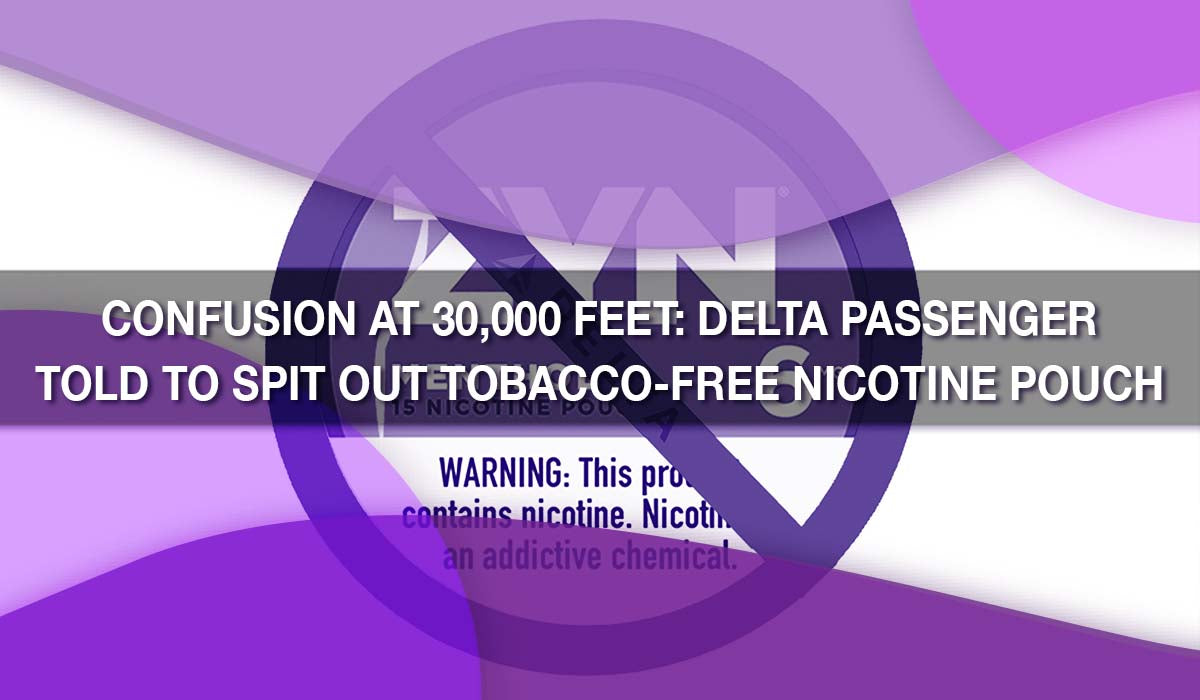
Confusion at 30,000 Feet: Delta Passenger Told to Spit Out Tobacco-Free Nicotine Pouch
A recent "r/delta" forum on Reddit has reignited the debate over nicotine pouches on planes after a Delta Air Lines passenger reported being asked to remove and discard his Zyn pouch mid-flight—despite the product being tobacco-free and allowed by the TSA in both carry-on and checked luggage.
“Got told to spit my Zyn out on a flight. I really didn’t know that was a thing?” the passenger wrote, bewildered by the policy enforcement.
The incident occurred in first class, though the traveler clarified that the seat wasn’t relevant to the issue. According to his account, a flight attendant brought him a cup and politely asked him to dispose of the pouch, calling it a “tobacco product.”
Delta’s current policy does not mention nicotine pouches as a restricted item.

So… Are Nicotine Pouches Allowed on Planes?
The answer: it’s murky.
While TSA guidelines clearly state that nicotine pouches are permitted on planes, there’s no uniform airline policy explicitly addressing their use during flights. In fact, most major U.S. airlines—Delta, American, Southwest, JetBlue, United—don’t mention nicotine pouches at all on their official websites.
The lack of clear language has left travelers and airline crews alike confused about how to enforce or interpret usage rules for products like Zyn, Rogue, Velo, and others.
Not Dip, Not Vape — So What’s the Problem?
Unlike traditional smokeless tobacco (e.g., dip or chew), modern pouches like Zyn pouches are spit-free and tobacco-free, containing only nicotine salt, flavoring, and plant-based fibers. They're discreet, odorless, and leave no trace. In many cases, they’re used as alternatives to nicotine gum or patches—products that are not just permitted but often encouraged for smokers.
And yet, nicotine pouches are regularly conflated with tobacco-containing products or e-cigarettes by staff unaware of the distinction.
“How would the flight attendant even know what it is? Just looks like gum/mints,” one Redditor asked.
Others chimed in to say they routinely use pouches during flights without issue, suggesting discretion plays a key role in whether you’re flagged.
A Policy Gap That Needs Fixing

The real problem here isn’t the pouch—it’s the policy gap.
Airlines have been quick to ban vapes, cigarettes, and smokeless tobacco (understandably so), but as nicotine delivery products evolve, corporate policies haven’t kept up. The lack of distinction between combustible, spit-based, and discreet oral alternatives creates unnecessary confusion and inconsistent enforcement.
Even more surprising? Some passengers reported seeing Zyn ads in airline magazines, seemingly promoting the product to frequent flyers.
“It is silly because no one would stop you from using nicotine gum or a patch,” one commenter added.
And they’re not wrong. If the concern is mess, smell, or disruption—nicotine pouches arguably present fewer issues than a half-unwrapped protein bar.
What Airlines (and the FAA) Should Do
Until the FAA or major carriers publish explicit guidelines, travelers will continue to experience conflicting enforcement. A few suggested solutions:
- Define “smokeless tobacco” clearly to separate Zyn-like products from dip.
- Train airline staff on modern nicotine products, especially tobacco-free options.
- Treat nicotine pouches the same as gum or patches.
Until then, the best advice? Be discreet, be informed, and be prepared to explain—just in case your nicotine pouch gets flagged at 30,000 feet.
Flavored Vapor Products are Not Available for purchase in the state of California



Leave a comment
This site is protected by hCaptcha and the hCaptcha Privacy Policy and Terms of Service apply.