







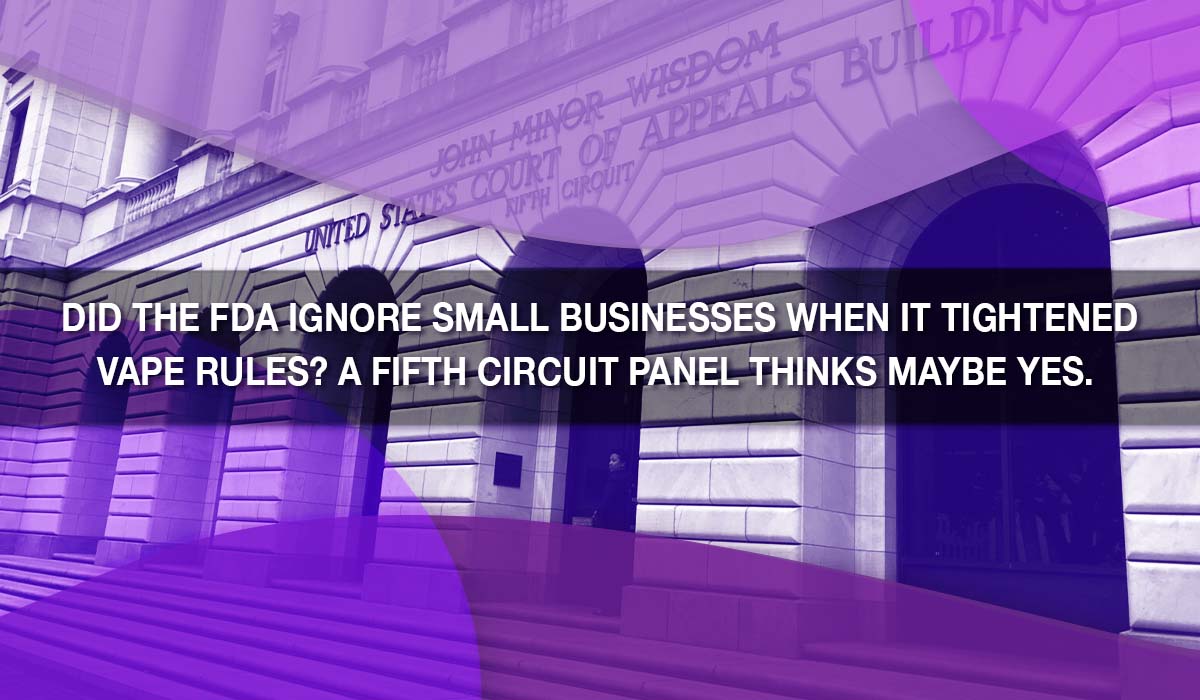
Did the FDA ignore small businesses when it tightened vape rules? A Fifth Circuit panel thinks maybe yes.
This week in New Orleans, a Fifth Circuit panel did something that’s rare in regulatory cases: it openly questioned whether the U.S. Food and Drug Administration truly followed the law when it finalized the 2021 rule governing premarket authorization for new tobacco products, including e‑cigarettes. The court’s skepticism isn’t just a technicality—it goes to the heart of whether regulators properly weigh the real-world impact on smaller companies before imposing enormous compliance costs.
What happened at the hearing
The case, filed by the USVA centers on the Regulatory Flexibility Act (RFA), a law that requires federal agencies to analyze how new rules affect small businesses and to consider less burdensome alternatives when possible. Vape companies challenging the 2021 rule argue the FDA relied on outdated economics, glossed over the financial strain on small producers, and didn’t seriously explore other paths that could reduce the burden.
According to coverage of the oral arguments, the panel pressed the FDA on several key points:
- Whether the agency actually met its RFA duties when it finalized the 2021 procedures for Premarket Tobacco Product Applications. Coverage notes the judge's questioned compliance with the RFA’s requirement to consider small businesses.
- How the FDA shifted from a more flexible stance in 2016 to demanding far more extensive scientific showings by 2021, and whether that shift was properly justified.
- Whether elements of the rule were mandatory under the Tobacco Control Act or instead discretionary, which affects how strictly the agency must justify them.
A recap adds color to the exchange: attorneys for the vaping companies argued the FDA used flawed and outdated economic inputs, failed to consider less burdensome options, and didn’t conduct adequate analysis in earlier rulemaking stages. Meanwhile, government lawyers maintained that the contested requirements were mandated by statute, though judges pressed them on apparent inconsistencies with earlier acknowledgments of heavy burdens on small firms.
Listen to a replay of the oral arguments here.
Why this isn’t just another court hearing
If the Fifth Circuit finds the FDA violated the RFA, the consequences could be significant:
- The agency might have to revisit its rulemaking. That could mean re‑analyzing economic impacts, looking at alternative compliance paths, or even modifying requirements for smaller manufacturers. Coverage suggests a ruling in favor of challengers could ease the compliance burden.
- Future PMTA and related actions could be affected. The case unfolds against a backdrop of ongoing disputes over FDA decisions on flavored e‑cigarette applications and other PMTA issues. A court decision stressing stronger RFA compliance might ripple into how the agency approaches similar rules and denials.
For small vape businesses already struggling with complex, expensive approval requirements, this moment could offer a critical check on regulatory overreach—especially if the court demands more transparent, up‑to‑date economic analysis or shows willingness to require the agency to consider less punishing options.
What to watch next
- The court’s written opinion. Oral arguments offer hints, but the ruling will determine whether the FDA’s process stands or must be revisited. That opinion will also clarify how strictly agencies must satisfy the RFA in this context.
- Potential changes in FDA rulemaking or guidance. If the Fifth Circuit rules against the agency, expect either regulatory revisions or additional analyses to address the court’s concerns.
- Broader industry implications. A finding that the FDA sidestepped small‑business considerations could embolden more challenges to current or future regulations—especially when compliance costs are high and the affected companies are not large national brands.
Why this matters beyond vaping
This case highlights a broader principle: when federal agencies impose costly rules, they are legally bound—not just ethically, but statutorily—to consider how small entities will cope. It’s a reminder that strong; well documented economic analysis and genuine consideration of alternatives are not optional extras—they are part of the rulemaking law.
For those invested in fair regulation, economic survival of small companies, and the rule of law, the Fifth Circuit’s scrutiny is a good sign that courts can, and do, hold agencies accountable when the costs of regulation might disproportionately fall on smaller players. The ultimate decision could help ensure that future rules are both protective of public health and mindful of the practical realities faced by small businesses on the ground.
Flavored Vapor Products are Not Available for purchase in the state of California


Leave a comment
This site is protected by hCaptcha and the hCaptcha Privacy Policy and Terms of Service apply.